Example Configurations

Typical systems by application

These are realistic configurations for the jobs I size most often — they show how your three numbers (well depth, water need, sun hours) turn into a real system. Send me yours and I'll build your configuration, free.

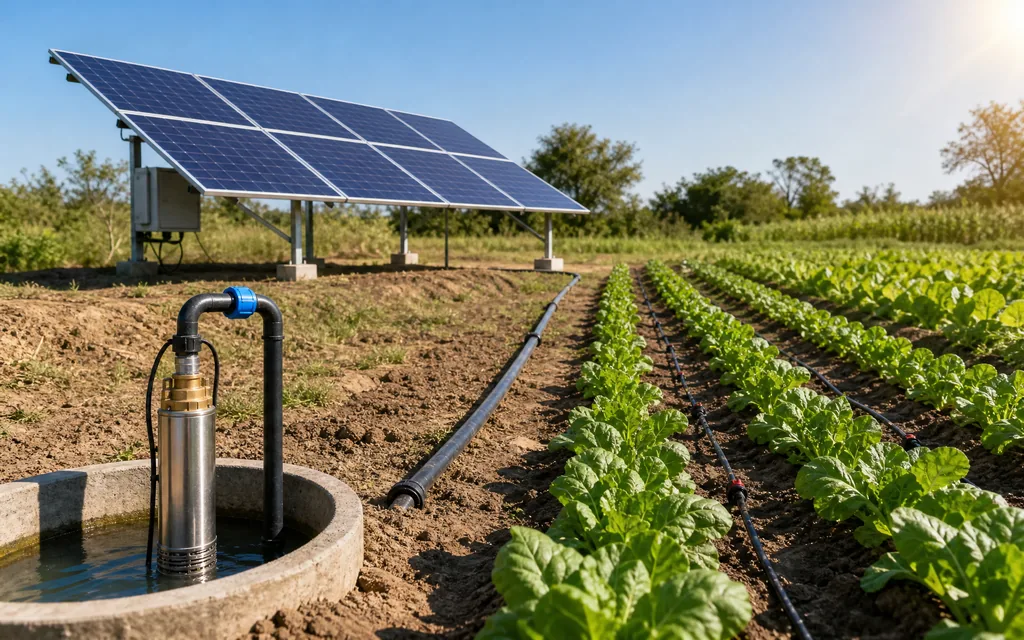
3HP submersible for a 2-hectare drip farm
💧 Farm Irrigation

3HP submersible for a 2-hectare drip farm

80 mWell depth
20 m³/dayWater output
6 × 550WSolar panels
2–5 haCoverage

Why this configuration

A 2-hectare drip farm needs steady pressure, not just volume. The pump lifts from 80 m, and 20 m³/day covers peak-season irrigation with about 5–6 sun hours. Panels are sized at ~1.5× pump power so the system keeps running through light cloud cover.

What's in the system

  • ✓ 3HP DC submersible pump (DQB-type)
  • ✓ MPPT controller (auto start/stop)
  • ✓ 6 × 550W mono panels
  • ✓ Float switch + cable set
Read the farm irrigation guide →
2HP system for a 400-head goat herd
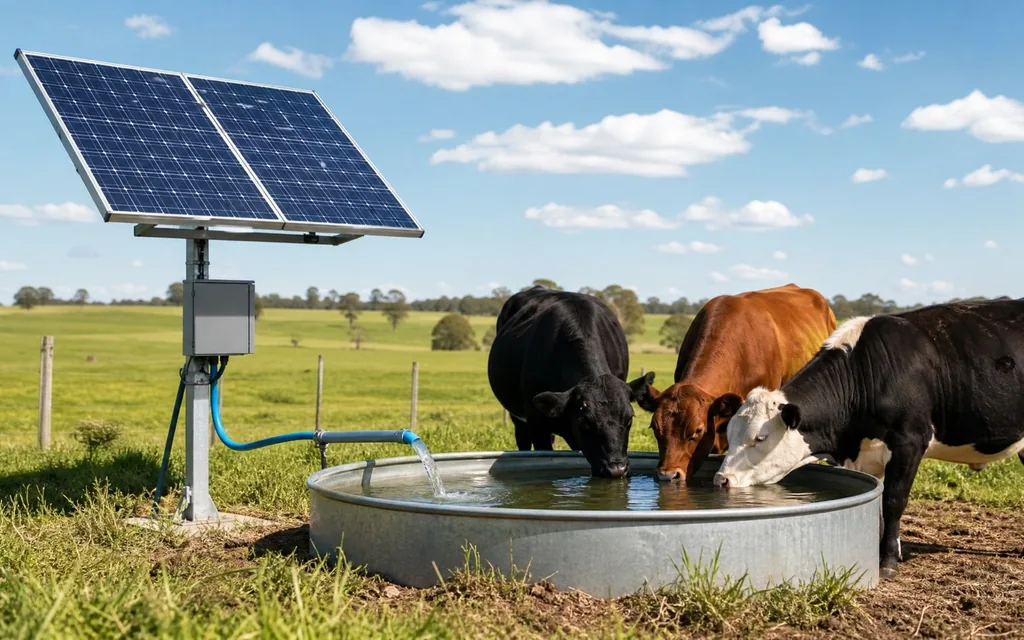
🐐 Livestock Watering

2HP system for a 400-head goat herd

60 mWell depth
12 m³/dayWater output
4 × 550WSolar panels
400 headHerd size

Why this configuration

Livestock watering is a low-flow, high-reliability job. 400 goats drink roughly 3–4 L/head/day — about 1.5 m³ — so 12 m³/day gives a comfortable buffer for trough refills and hot days. The 2HP pump is a surface-type booster (DZB) that primes itself from a shallow well.

What's in the system

  • ✓ 2HP surface booster pump (DZB-type)
  • ✓ MPPT controller
  • ✓ 4 × 550W mono panels
  • ✓ Trough float valve
Read the livestock watering guide →
5HP deep-well supply for an off-grid community
🏘️ Village Supply

5HP deep-well supply for an off-grid community

120 mWell depth
35 m³/dayWater output
12 × 550WSolar panels
Deep wellApplication

Why this configuration

Community supply means the system runs every single day — there is no backup. The 120 m well sets the total head, and 35 m³/day covers ~150–250 people plus storage losses. Panels are oversized (12 × 550W) on purpose: they shorten the fill time and carry the system through dusty, hazy afternoons.

What's in the system

  • ✓ 5HP deep-well submersible pump
  • ✓ MPPT controller + soft start
  • ✓ 12 × 550W mono panels (2 strings)
  • ✓ Pressure tank + water level sensors
Read the off-grid guide →
1.5HP system for a family vegetable garden
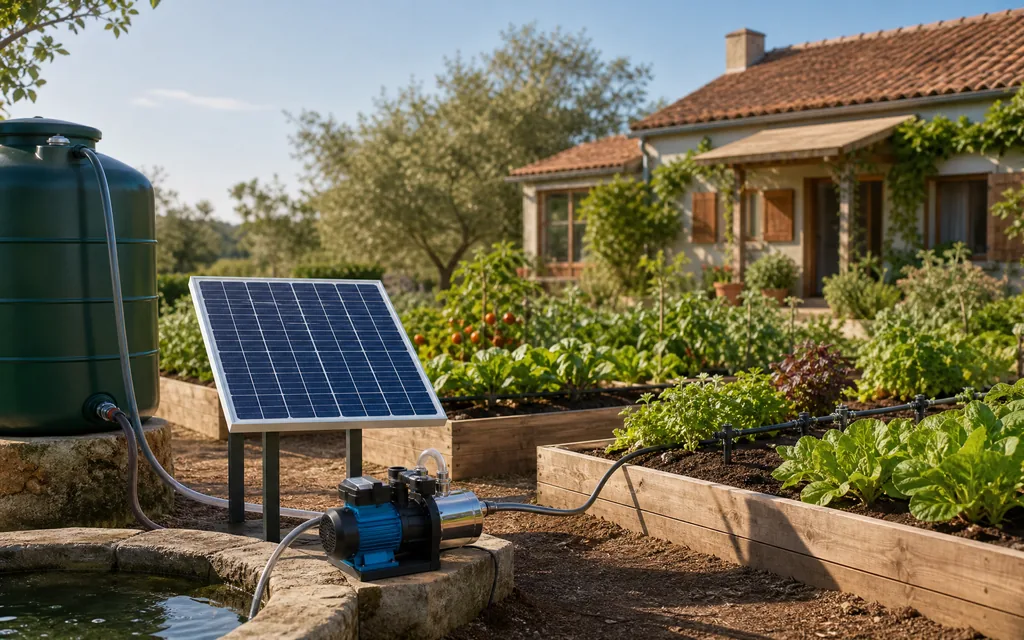
🥬 Home Garden

1.5HP system for a family vegetable garden

45 mWell depth
8 m³/dayWater output
3 × 550WSolar panels
< 1 haCoverage

Why this configuration

A small garden needs a small, quiet system you can forget about. 45 m is within easy reach of a compact submersible, and 8 m³/day is several times what a family garden needs — plenty for vegetable beds, a small tank, and a few fruit trees.

What's in the system

  • ✓ 1.5HP compact submersible pump
  • ✓ MPPT controller
  • ✓ 3 × 550W mono panels
  • ✓ Timer or float switch
Read the sizing guide →
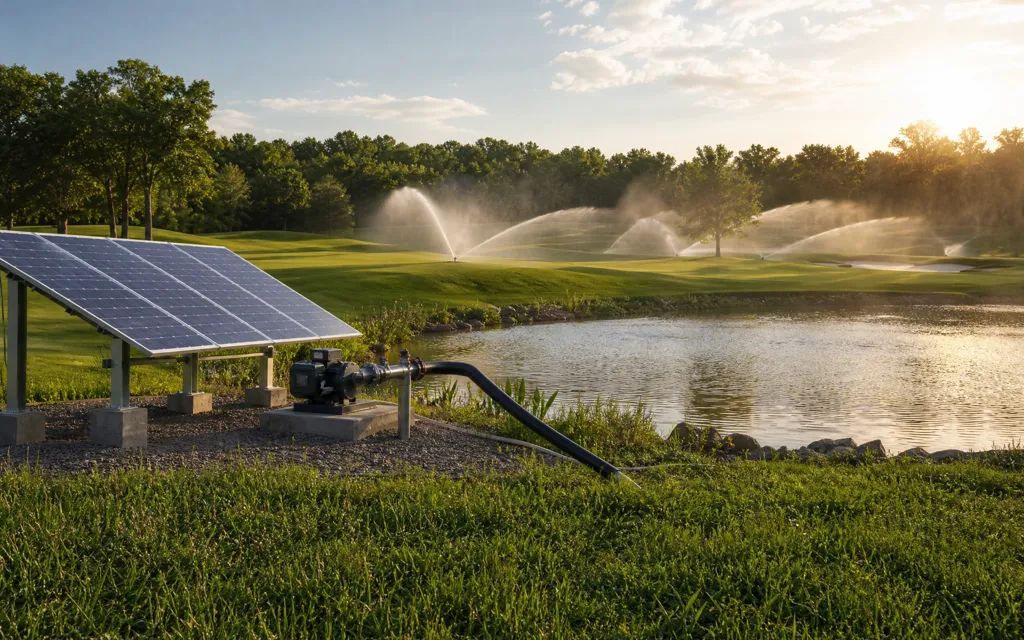
4HP surface system for golf course irrigation ponds
⛳ Golf Course

4HP surface system for golf course irrigation ponds

30 mPond depth
40 m³/dayWater output
8 × 550WSolar panels
2 pondsApplication

Why this configuration

Golf courses move water between ponds and sprinkler zones all year — a job for a high-flow surface pump, not a deep-well submersible. The 30 m lift is easy for a 4HP centrifugal (DCPM-type), and 40 m³/day covers the main sprinkler zones plus pond top-up. Panels at ~1.4× pump power keep the system pumping through the afternoon haze.

What's in the system

  • ✓ 4HP centrifugal surface pump (DCPM-type)
  • ✓ MPPT controller with dry-run protection
  • ✓ 8 × 550W mono panels
  • ✓ Flow meter + hose connections
Read the surface pump comparison →
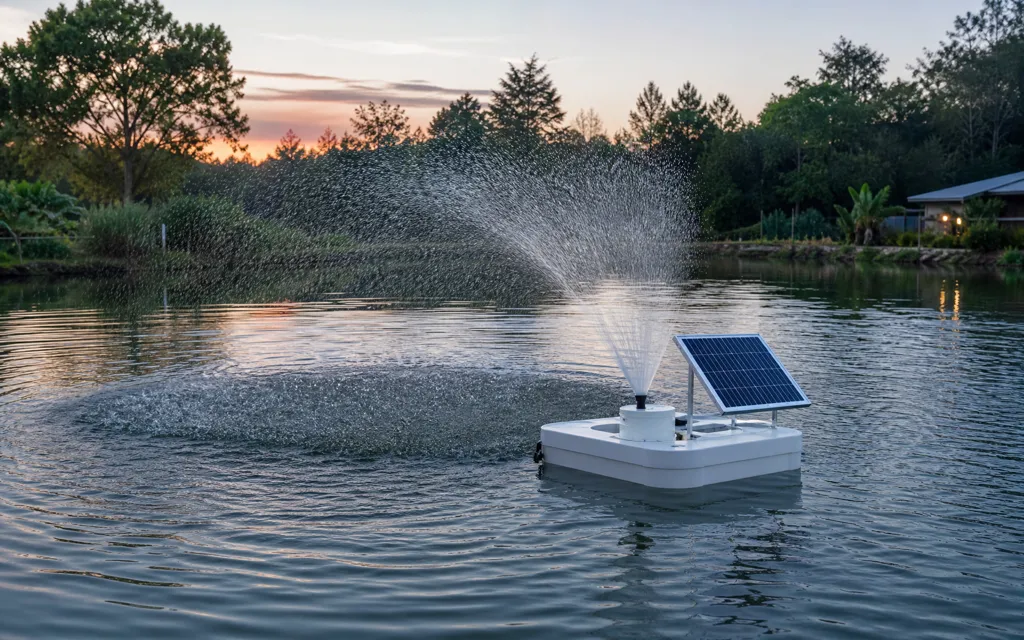
1HP solar aerator for a 2-acre fish pond
🐟 Fish Pond Aeration

1HP solar aerator for a 2-acre fish pond

0.5 mWater depth
8 m³/hAeration flow
2 × 550WSolar panels
2 acresPond size

Why this configuration

Fish ponds need oxygen, not pressure — a pond aerator (DSA-type) floats on the surface and sprays water to add dissolved oxygen. A 1HP aerator moves about 8 m³/h, plenty for 2 acres, and runs automatically whenever the sun is up. This is one of the lowest-maintenance solar systems you can buy: no well, no pipes, just the unit and two panels.

What's in the system

  • ✓ 1HP solar floating aerator (DSA-type)
  • ✓ 2 × 550W mono panels
  • ✓ Anchor kit + float lines
  • ✓ Optional battery for night aeration
Read submersible vs surface →
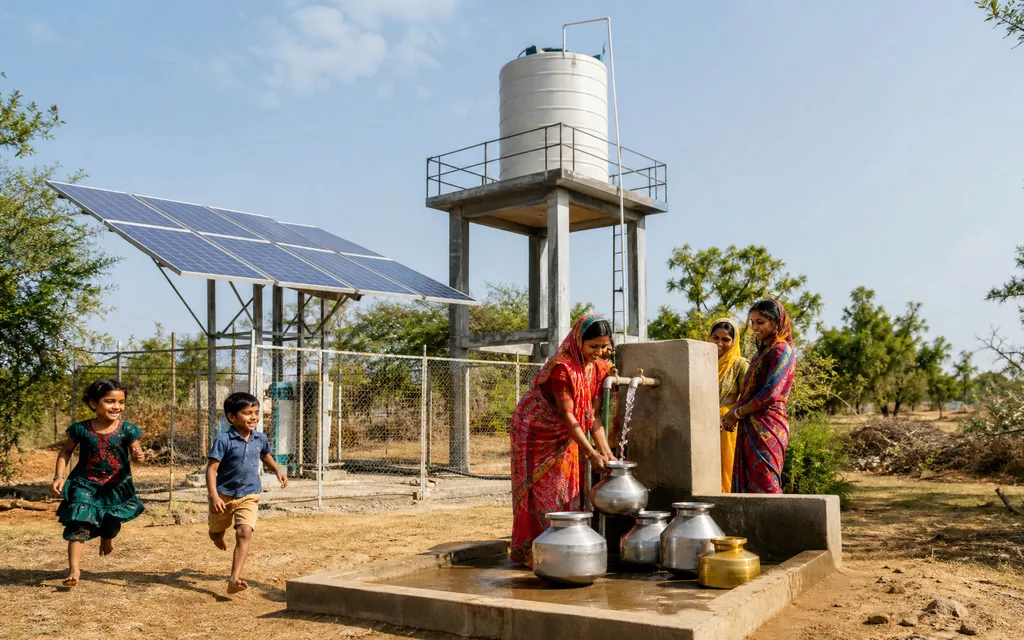
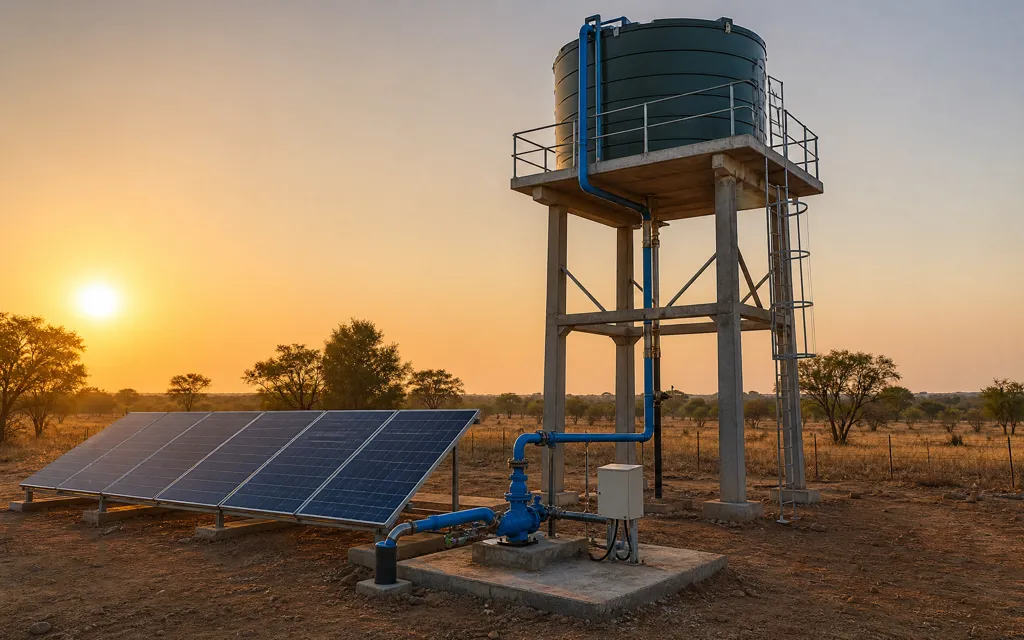
3HP submersible refilling a 20 m³ water tower
🗼 Water Tower Supply

3HP submersible refilling a 20 m³ water tower

70 mWell depth
18 m³/dayWater output
6 × 550WSolar panels
20 m³Tower size

Why this configuration

A water tower changes the pumping math: you pump to a tank that is 25 m above ground, so total head = well depth + tower height + friction. At 70 m well + 25 m tower ≈ 95–100 m total head, a 3HP submersible still delivers ~5 m³/h — enough to refill a 20 m³ tower in one good sunny day. The tower then supplies the village by gravity, so the pump only runs when the tower level drops.

What's in the system

  • ✓ 3HP deep-well submersible pump
  • ✓ MPPT controller + low-water cutoff
  • ✓ 6 × 550W mono panels
  • ✓ Tower level switch (automatic refill)
Read how to calculate head →
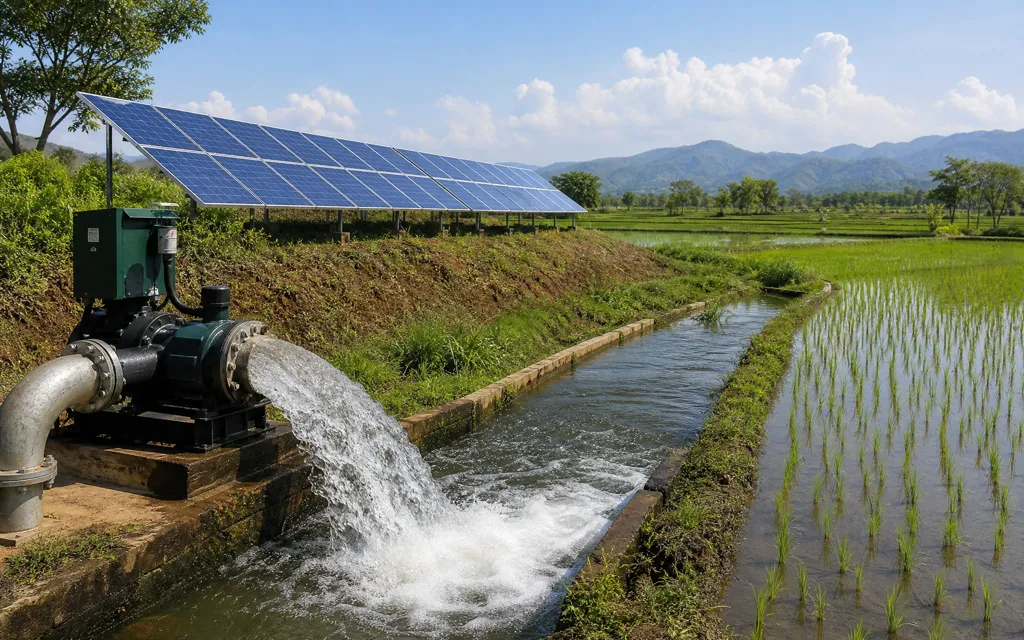
6HP high-flow lift for a canal-fed rice paddy
🛢️ Canal Lift

6HP high-flow lift for a canal-fed rice paddy

6 mLift height
120 m³/dayWater output
14 × 550WSolar panels
6 haCoverage

Why this configuration

Rice paddies need large volumes at low head, not high pressure. A 6HP high-flow pump (DFSU-type) lifts water 6 m from the canal into the paddy — 120 m³/day covers about 6 hectares. Because the lift is low, the pump runs efficiently and the panel array can be sized closer to 1.3× pump power, saving money.

What's in the system

  • ✓ 6HP high-flow pump (DFSU-type)
  • ✓ MPPT controller with dry-run protection
  • ✓ 14 × 550W mono panels (2 strings)
  • ✓ Strainer + foot valve + delivery pipe
Read the agriculture guide →
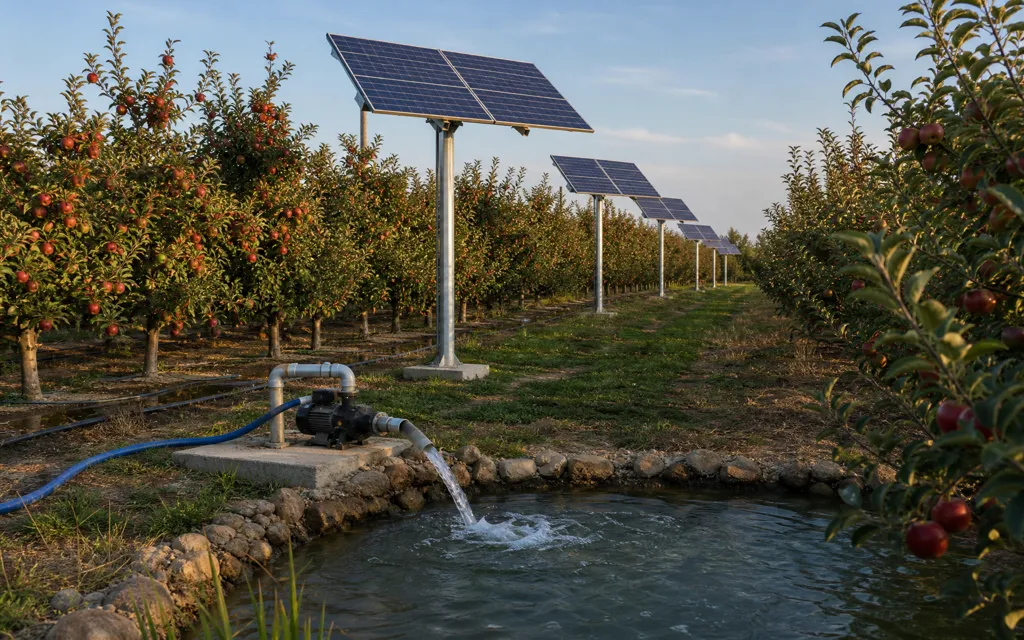
2HP surface pump for a 3-hectare orchard block
🍎 Orchard Irrigation

2HP surface pump for a 3-hectare orchard block

12 mSuction lift
16 m³/dayWater output
4 × 550WSolar panels
3 haOrchard area

Why this configuration

An orchard needs reliable water at moderate pressure for drip or micro-sprinklers. A 2HP surface pump (DCPM-type) draws from a pond or shallow well 12 m away and pushes 16 m³/day — enough for 3 hectares of mature trees at ~5 L/tree/day. Surface pumps are easy to service and cost less than submersibles when the source is above ground.

What's in the system

  • ✓ 2HP centrifugal surface pump (DCPM-type)
  • ✓ MPPT controller + pressure switch
  • ✓ 4 × 550W mono panels
  • ✓ Filter + drip manifold kit
Read how to calculate head →
Get Yours

Your configuration in 3 steps

1

Send me your numbers

Well depth, daily water need, country/city, and what the water is for.

2

I size it for you — free

Within 24 hours you get a pump + panel + controller configuration built for your numbers.

3

You decide

No obligation. Compare it, ask questions, or take it to any supplier you trust.

FAQ

Common questions about these systems

Are these configurations right for my well?

Not automatically — they are starting points. Your pump choice depends on your exact well depth, the static water level, daily water need and sun hours. Send me those numbers and I will build your configuration, free.

Why are the solar panels roughly 1.5× the pump power?

The spec-sheet minimum is 1.3× pump power, and 1.5× is the recommended working margin. A solar pump rarely gets perfect midday sun all day. Panels at ~1.5× pump power let the system start earlier in the morning, keep running through light cloud, and still hit your daily water target. Oversizing panels is usually cheaper than upsizing the pump later.

Will the pump still work on cloudy days?

Yes — it slows down instead of stopping. With the panel ratios above, most systems pump for 6–8 hours on clear days and 3–4 hours under heavy cloud. If your crop or animals need water every day no matter the weather, add a small storage tank: tanks are far cheaper than batteries.

How long will the system last?

A good DC pump with an MPPT controller typically runs 8–10+ years, and the panels 25+ years. The most common failure point is not the pump — it is undersized cables, loose connections, or running the pump dry. The install guide covers how to avoid each.

Not sure which pump fits your farm?

Send me your well depth, daily water need and location. I'll size the system for you — free, no obligation, reply within 24 hours.

💬 Chat with Trista on WhatsApp

or email: sales03@diffulpump.com

wa.chat